Hope you’re able to enjoy some time outside this weekend.
Thinking: Optional. Relaxing: Mandatory.
There are a lot of amazing hiking trails nearby where I go to reconnect and recharge. The great outdoors requires very little of us, other than showing up. I feel a little lighter and stay in the moment a little longer when I’m among the trees & sunshine.
How about you? Does nature help you feel replenished & refreshed? What’s your favorite way to recharge on the weekends?
EvenMORE reasons to read to a child. Reading aloud “builds a child’s WANT to read.” Think your kiddo is too old for you to read to them at bedtime? Think again. Check out the difference in a child’s interest in reading between Kindergarten and Fourth Grade! What was the key difference? Parents stopped reading to kids.
By 12th grade-only 19% of kids asked said they were interested in reading! When you consider that higher levels of college readiness are linked to reading skills, I have just one word for that statistic: Noooooooo….but what can you do about it?
One thing our family started last summer was family reading time. We picked a classic-The Wind in the Willows-and each of us would read a few pages at a time. We read it together each night and enjoyed the simplicity of the words, the comfort of the timeless message and the beauty of the illustrations. Yes, even my Minecraft lovin’ middle school boy unplugged long enough to take part! He loved doing accents and really cracked up at Toad’s antics. So get silly, have fun, and share the joy of reading at any age!! What types of family reading do you do with your kids?
This beautiful infographic was produced by usborneusa.com and Nancy Ann Wartman
OK, you got me!! There are only 10 items on the list. The 11th one is up to you! What ideas do you have for performing a Random Act of Kindness this summer? May I suggest “Read to a Child“? It is simple, costs nothing but a little bit of your time, and can make all the difference in the world.
But, hey, anything you do is gonna make you feel all warm & fuzzy inside…so, go for it…
Start a Kindness Chain…
Because once you start it…kindness ripples out like water in a pond, spreading farther and farther. And that’s 100% scientific fact. Yep, I swear!! Kindness is contagious!
So what’s YOUR #11?? Let’s add some ideas to this list. Add your suggestions here. Thanks! 🙂
Thisgraphic that appeared in the New York Times explains part of the reason why I’ve started this blog, College Ready. Location is a key factor on whether or not children are able to climb the income ladder. Upward mobility varied greatly in cities that have the same or comparable average incomes.
I’m committed to closing the Opportunity Divide, so that every student who can succeed in college, gets that chance to actually get to college. We can’t afford to let geography alone be a barrier to education, employment, equality or economic stability.
Mentors and coaches, peers, and other role models can help. As I’ve said before, the presence of just one adult in a child’s life who believes in him or her, and shows up, makes a difference. There’s not an easy answer but taking one small action can start a ripple effect. I challenge you to spend an hour a week reading to a child-even if it is your own child-and start that ripple.
What are some of your best ideas for helping everyone have a chance at the American Dream?
The solution: Keep it REAL–4 Easy Steps to credible & authentic source material.
When it comes time to do research, most of us (not *just our students), reach for our phones and just “Google it.”
Yet, when it comes time to incorporate source content into their writing, we want students to go beyond that one easy step. Our students have an enormous amount of information at their fingertips. And therein lies the difficulty. They literally carry around so much data in their smartphones, it’s enough to make a grad student’s head spin, let alone a frosh college student, or the high school set.
As we know though, all internet sources are NOT created equal. From paid links, to content farms and the like–what steps can students-and the rest of us–take to analyze a source for credibility? By using this handy chart with the mnemonic REAL , they will be able tosort through a lot of the “junk” that’s available and find a nugget of REAL, and credible information.
The four quick and easy steps are: Read the URL. Examine Content. Ask about the Author. Look at the Links.
Use an in-class discussion to educate students on the importance of each of these four categories, using the chart as a guide while you talk. Have a variety of articles related to the same topic, but from different websites, ready to look at on your smartboard, so students have a visual for the type of comparisons and analysis that is involved.
There are other approaches to this question of source credibility. However, I’d rather give my students a quick and easy tool that they are likely to actually remember and use, then a long, pragmatic list of filters and variables that will cause their eyes to gloss over.
So, when it comes to source credibility, let’s help our students keep it REAL. What do you think–is this an approach that would work in your classroom? Or in your own professional writing? If you’re a student, would this method help you? I’d love to hear from you!
“Combating learning loss over the summer for young readers is a challenge that many teachers face. The amount of time it takes to assign summer reading along with the lack of face time to keep students up to date with their reading and comprehension can make summer reading seem like a less-than-useful task.”
These apps might just make the summer reading less of a chore. What do you think?
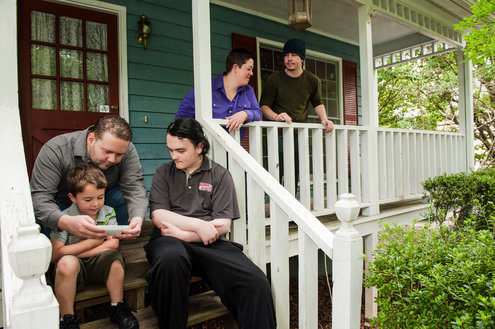
Did you know…the presence of at least one caring, supportive adult in a child’s life can make all the difference?
I’m passionate about student success and educational equality. Sometimes, we look at our education system, and all we see are the broken pieces the media reports on, so we toss up our hands and say, “well what can I do, I’m just one person,” absolving ourselves from the whole thing. But, that’s exactly right–you are ONE person and ONE person is all it takes. That’s the Power of You.
Research shows that when adults get involved to mentor and work with students, they have the power to help kids increase academic achievement, stay on track, think more positively about themselves and increase their opportunities of going on to college.
Think you’re too busy to get involved? Mentoring doesn’t take as much time as you might think. It is as simple as signing up to read to a child for an hour a week. This can make all the difference in the life of an at-risk child, because statistics show us that a child that can’t read well by the end of third grade is FOUR times more likely to drop out of high school.
So, the easy way to earn your Super Hero cape? Sign up as a mentor. Help close the opportunity gap a little bit. And the funny thing is–you will end up feeling like you’re the one that was given a gift. That’s right! By helping someone else move forward a little bit…you move yourself forward.
If you don’t know where to start, try your local library or the United Way. If you already volunteer as a mentor, leave a comment and tell us what you’re involved in. If you think you might want to mentor a young person, but haven’t made the leap, what’s holding you back? I’d love to hear from you.
Source: Double Jeopardy: How 3rd Grade Reading Scores and Poverty Influence High School Graduation


 I start with this quote on day one of my classes. Great advice from one of the best in his profession, and it never fails to inspire.
![786e5cd6bd2669ffe2e57208cf994972[1]](https://collegereadycoach.com/wp-content/uploads/2013/07/786e5cd6bd2669ffe2e57208cf9949721.jpg)
 ng learning loss over the summer for young readers is a challenge that many teachers face. The amount of time it takes to assign summer reading along with the lack of face time to keep students up to date with their reading and comprehension can make summer reading seem like a less-than-useful task.”
![10573321855[1]](https://collegereadycoach.com/wp-content/uploads/2013/07/105733218551.jpg)

 College Ready